Your customers are already asking ChatGPT who to trust, what to buy and which businesses to use. Now imagine your business being part of that conversation.
Something remarkable is happening in the way people find businesses.
For years, when we needed a product or service, we turned to Google.
We typed a few words, looked through the results and visited websites until we found what we wanted.
But things are changing.
Today, millions of people are turning to ChatGPT as their trusted digital advisor.
They ask questions, request recommendations, compare products and seek advice before spending their money.
And here’s the interesting part.
People are beginning to trust these conversations enough to make real purchasing decisions.
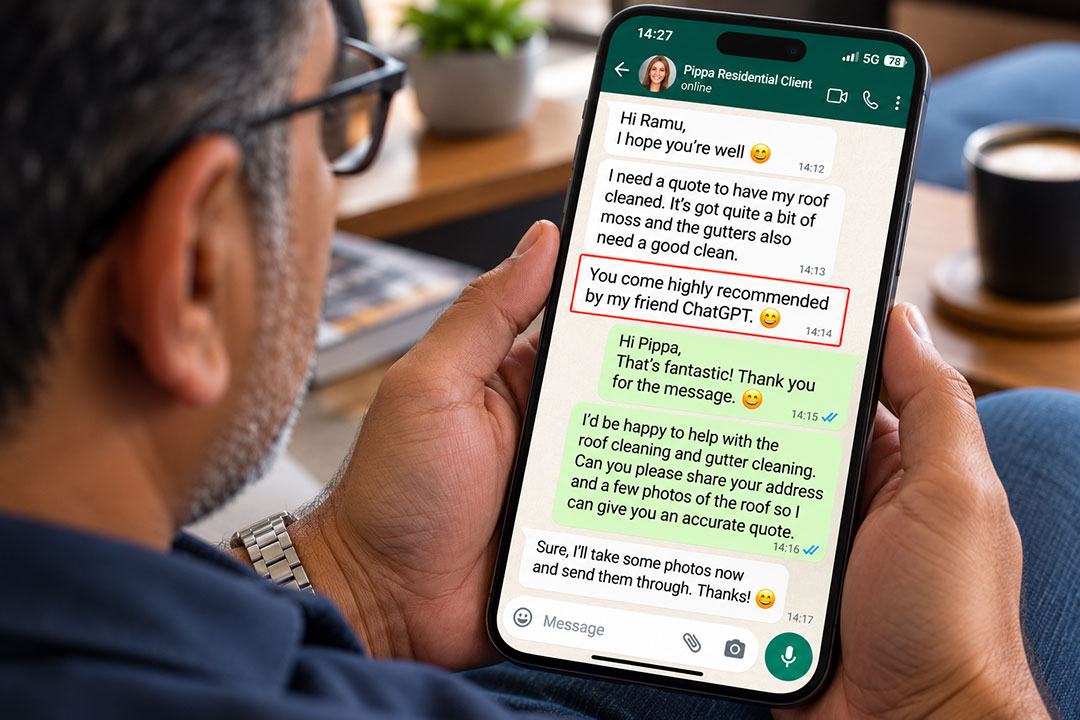
I know this because some of my own clients have sent me screenshots showing that their customers discovered their businesses through ChatGPT.
Not through a Google search.
Not through a Facebook advertisement.
Through a conversation with artificial intelligence.
Now, with the introduction of ChatGPT Ads, businesses have a new opportunity to reach potential customers while they are researching, comparing and deciding what to buy.
And I believe this could become one of the most important developments in digital marketing.
Let me explain why, in simple English.
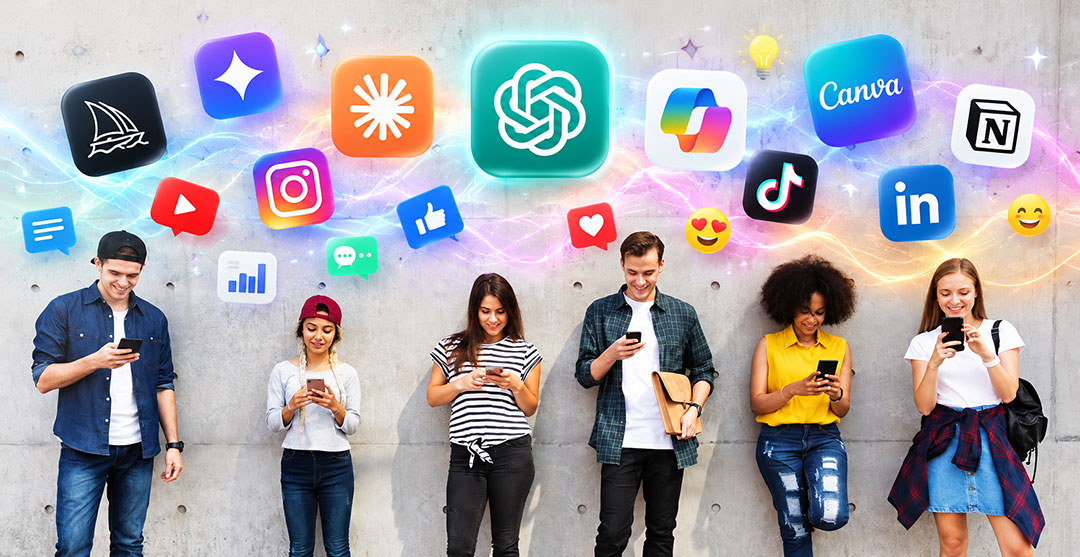
1. Google Helps You Search. ChatGPT Helps You Decide.
Google Helps You Search. ChatGPT Helps You Decide.
Imagine you’re looking for a new laptop.
On Google, you might type:
“Best laptop under R15,000.”
Google gives you websites, advertisements, shopping results and reviews.
You then have to work through the information yourself.
Now imagine asking ChatGPT:
“I’m starting a small business. I need a laptop for emails, Canva, Zoom meetings and basic video editing. My budget is R15,000. What should I buy?”
ChatGPT can explain your options, compare specifications and help you understand which laptop suits your needs.
You can then ask more questions.
“Which one has better battery life?”
“Will it run Canva smoothly?”
“Where can I buy it in South Africa?”
This is the difference.
Google is traditionally where we search. ChatGPT is increasingly where we have conversations that help us decide.
And those conversations create a new opportunity for advertisers.
2. What Are ChatGPT Ads?
ChatGPT Ads are paid advertisements that can appear alongside conversations inside ChatGPT.
Think of them as sponsored recommendations displayed separately from ChatGPT’s actual answers.
For example, someone might ask:
“I need a reliable website designer in Durban who can build a modern website for my small business.”
ChatGPT could explain what to look for when choosing a website developer.
A relevant sponsored advertisement for a website development company could also appear.
The advertisement is clearly labelled as sponsored.
It does not mean ChatGPT personally recommends or endorses that business.
And advertisers cannot pay ChatGPT to change its answers.
The opportunity is simple: businesses can advertise where potential customers are already discussing their needs.
That is what makes ChatGPT advertising so interesting.
3. Why This Could Be Bigger Than Google Ads
Let’s be clear.
Google Ads is still one of the most powerful advertising platforms in the world.
ChatGPT advertising is new, and nobody can honestly guarantee that it will outperform Google Ads.
But the potential is enormous.
Here’s why.
When someone searches Google for “running shoes,” we know they’re interested in running shoes.
But we don’t necessarily know why.
Are they training for a marathon?
Do they have a limited budget?
Are they buying their first pair?
Are they looking for shoes for their teenage child?
Now imagine someone telling ChatGPT:
“I’m 45 years old, I’ve started walking every morning, and I need comfortable running shoes under R2,000 because my feet hurt after long walks.”
That conversation provides much more context about what the customer needs.
An advertiser offering suitable footwear could potentially reach someone with a very specific purchasing requirement.
This is called conversational intent.
In simple terms, conversational intent means understanding what someone wants through the questions they ask and the information they share.
Traditional search advertising often starts with keywords.
Conversational advertising can use the broader context of a discussion to identify relevant advertising opportunities.
That doesn’t mean advertisers can read people’s private conversations.
They cannot.
But it does mean the advertising system can use eligible contextual signals to select relevant sponsored placements.
The future of digital advertising may not simply be about what people search for. It may be about what they are trying to achieve.
4. Your Customers May Already Be Finding You Through ChatGPT
Here’s something many business owners haven’t realised.
Your business may already be appearing in ChatGPT conversations without you paying for advertising.
As a digital marketing specialist, I’ve experienced this firsthand.
Clients have sent me screenshots showing that customers found their businesses through ChatGPT.
For me, that was a significant moment.
It demonstrated that artificial intelligence was no longer just a tool for writing emails, creating content or answering questions.
It was becoming part of the customer journey.
A customer could ask ChatGPT for a service provider, discover a business, visit its website and make an enquiry.
All without starting on Google.
This is why businesses need to understand two important opportunities.
Organic AI visibility is when your business appears in AI-generated answers without paying for an advertisement.
Paid ChatGPT advertising is when your business pays for a sponsored placement that may appear in a relevant conversation.
They are different strategies.
And a smart business should understand both.
5. Which South African Businesses Could Benefit?
Almost any business that solves a customer problem could potentially benefit from this new advertising channel.
Consider a few examples.
A homeowner asks ChatGPT how to choose a reliable plumber in Durban.
A business owner asks which company can help train employees to use artificial intelligence.
A parent asks for advice on selecting a private school.
A couple planning a wedding asks for photographers in Cape Town.
An entrepreneur asks where to buy quality packaging materials in South Africa.
A customer compares different online stores selling copper water bottles.
These are all conversations in which commercial decisions could be made.
And they represent potential opportunities for relevant businesses.
Industries worth exploring include professional services, education, training, e-commerce, home improvement, technology, travel, hospitality and many others.
Of course, advertising availability, targeting options and policies will determine which businesses and campaigns are eligible.
The important lesson is that ChatGPT advertising is not limited to technology companies.
It’s about connecting businesses with people who have real needs.
6. How Does ChatGPT Advertising Work?
Let’s simplify the process.
A business creates an advertising account through OpenAI’s advertising platform.
It then prepares an advertisement explaining what it offers.
The advertiser selects campaign objectives, sets a budget and provides information about the types of conversations where the advertisement may be relevant.
The advertising system uses eligible signals to determine when an ad might be appropriate.
If the advertisement is selected, it can appear as a sponsored placement.
The customer can then click through to the advertiser’s website.
It’s important to understand that advertisers do not control ChatGPT’s answers.
They cannot force ChatGPT to mention their business.
And they cannot purchase a guaranteed recommendation.
Instead, they are paying for advertising space, much like they do on other digital advertising platforms.
Businesses can measure advertising performance through metrics such as impressions, clicks and supported conversion tracking.
An impression means someone was shown the advertisement.
A click means someone clicked it.
A conversion could mean a completed enquiry, purchase or another valuable action, depending on the campaign’s tracking setup.
Simple enough?
7. What Makes ChatGPT Ads Different From Facebook and Instagram Ads?
Think about what you’re doing when you open Facebook or Instagram.
Most of the time, you’re scrolling.
You might be watching funny videos, looking at photographs or catching up with friends.
An advertisement interrupts that experience.
Sometimes it’s relevant.
Sometimes it isn’t.
Now think about what you’re doing when you open ChatGPT.
You often have a specific question, problem or task.
You might be planning a purchase, researching a service or trying to make a decision.
That’s a different mindset.
Social media advertising often competes for your attention. Conversational advertising has the opportunity to appear while you’re actively seeking an answer.
This doesn’t automatically make ChatGPT Ads more effective.
But it does create an exciting new marketing environment.
And for businesses selling products or services that require research and consideration, that environment could be particularly valuable.
8. Is ChatGPT Advertising Available in South Africa?
Yes.
ChatGPT advertising has expanded into South Africa, creating a new opportunity for local advertisers.
Businesses can explore the official advertising platform at https://ads.openai.com.
As with any new advertising service, businesses should confirm account eligibility, available features, billing requirements and advertising policies before committing a budget.
And remember, advertising on ChatGPT is different from using ChatGPT to create advertisements for Google or Facebook.
One involves placing paid advertisements inside ChatGPT.
The other involves using artificial intelligence to help produce marketing content for existing platforms.
Both can be useful.
But they are not the same thing.
9. Should You Stop Advertising on Google?
Absolutely not.
That would be a mistake.
Google Ads, Facebook Ads, Instagram Ads, search engine optimisation and ChatGPT advertising all serve different purposes.
A customer might discover your business on Facebook.
Research your services through ChatGPT.
Check your Google reviews.
Visit your website.
And finally contact you through WhatsApp.
That’s how modern marketing works.
Customers move between platforms before making decisions.
The goal isn’t to abandon Google.
The goal is to make sure your business can be discovered wherever your potential customers are looking.
The businesses that adapt early will have more opportunities to learn what works before their competitors catch up.
10. The Biggest Mistake Businesses Can Make Right Now
The biggest mistake is assuming that because your website appears on Google, your business will automatically be visible inside AI conversations.
That’s not guaranteed.
AI discovery introduces new considerations.
Your website should clearly explain what your business does, where it operates, who it serves and why customers should choose it.
Your business information should be accurate and consistent.
Your content should answer genuine customer questions.
And your website should be technically accessible to relevant search and AI discovery systems.
This is where AI Engine Optimisation (AEO) and traditional Search Engine Optimisation (SEO) become increasingly important.
But don’t confuse improving organic AI visibility with purchasing ChatGPT Ads.
They are complementary approaches, not interchangeable ones.
A business can pursue organic visibility while separately testing paid advertising.
11. The Future of Advertising Is Becoming a Conversation
Think about how much digital marketing has changed.
We moved from newspaper advertisements to websites.
From websites to Google search advertising.
From Google to Facebook and Instagram.
Then came TikTok, short-form videos and influencer marketing.
Now artificial intelligence is changing how people discover information and make decisions.
And we’re only at the beginning.
I believe conversational advertising has the potential to become a major part of the digital marketing landscape.
Not because Google is disappearing.
But because customer behaviour is changing.
People don’t always want ten websites to browse.
Sometimes they want someone, or something, to help them understand their options.
And increasingly, that something is ChatGPT.
For businesses, the opportunity is to understand this shift before it becomes the norm.
12. Is Your Business Ready for the ChatGPT Advertising Revolution?
At Yashtech Consulting, we’ve spent years helping South African businesses navigate the changing world of digital marketing.
From website development and search engine optimisation to Google Ads, social media advertising and artificial intelligence training, our focus has always been practical.
We help businesses understand technology and use it to create real opportunities.
Now we’re exploring the next chapter.
ChatGPT Advertising and AI Search Visibility.
Whether you’re a small business owner, an established company or an entrepreneur looking for new customers, now is the time to start asking an important question.
When your next customer asks ChatGPT for a business like yours, will they discover you or your competitor?
You don’t have to understand artificial intelligence, conversational targeting or digital advertising technology to get started.
That’s where we come in.
Your Customers Are Asking ChatGPT. Is Your Business Part of the Conversation?
Don’t wait until your competitors have figured out this new advertising opportunity.
Contact Yashtech Consulting today to discuss ChatGPT advertising, AI search visibility and how your business can prepare for the next generation of digital marketing.
We’ll help you understand the opportunity, assess your business’s readiness and explore the advertising options available to you.
The conversation has already started. Make sure your business isn’t left out.
Yashtech Consulting — Helping South African Businesses Get Found, Get Noticed and Get Customers.
Call: 031 024 5470
WhatsApp: 081 714 6525
Email: [email protected]
Website: https://www.yashtech.co.za